Rethinking Dengue Preparedness in the Era of Climate Change, Urbanisation, and Digital Health: A Structured Narrative Review
- Published
- 17 September 2026
- DOI
- 10.3390/medicina62071333
- Views
- 1
- Reads
- 0
- Citations
- 0
Abstract
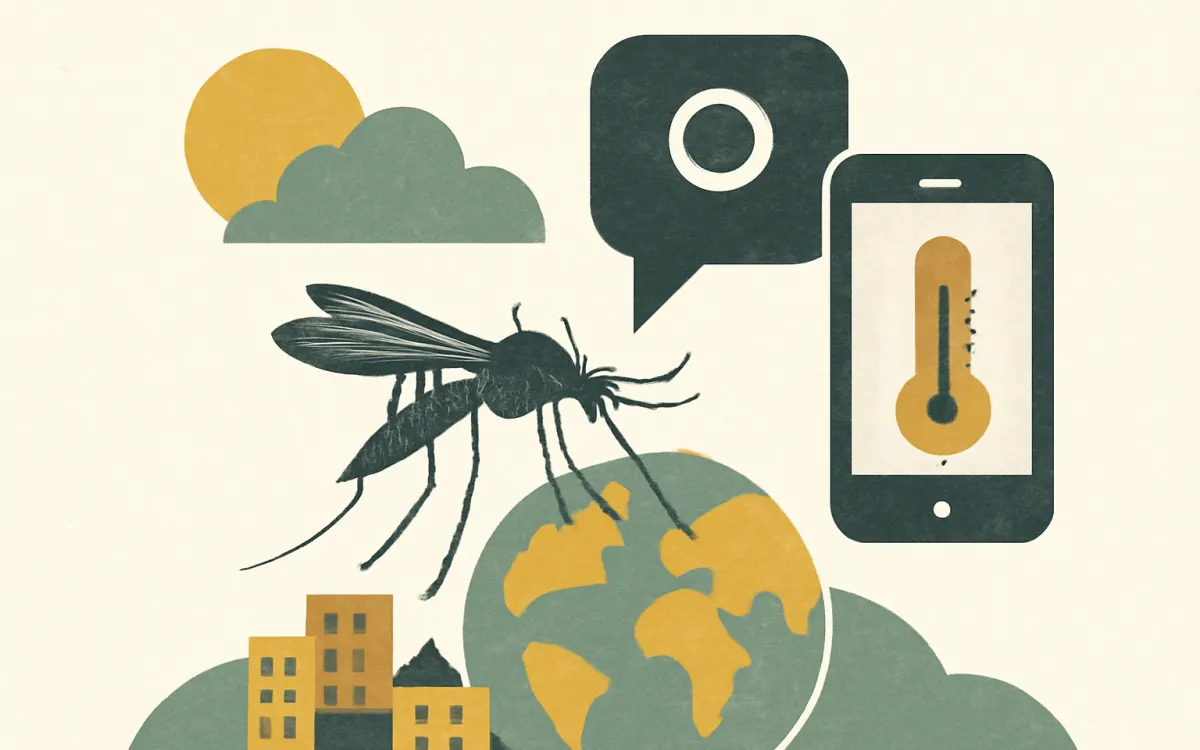
Background and Objectives: Dengue is emerging as a multifaceted public health challenge that extends beyond traditional vector-borne disease frameworks. Climate change, rapid urbanisation, environmental transformation, global mobility, and digital ecosystems are progressively reshaping transmission dynamics, outbreak patterns, and preparedness needs worldwide. This narrative review aimed to examine dengue from an integrated public health perspective, focusing on climate-sensitive transmission, urban health, surveillance and preparedness, digital epidemiology, artificial intelligence (AI), and health communication. Materials and Methods: A structured narrative review was conducted through targeted literature searches in PubMed, Scopus, and Web of Science between April and May 2026. To this end, a series of separate thematic search strategies were developed to explore the principal conceptual domains addressed in the review. The synthesis was organised around five interconnected preparedness domains: climate change and environmental transformation; urbanisation and urban health; surveillance, vaccination, and integrated preparedness; digital health, artificial intelligence, and mathematical modelling; and health communication and community engagement. The retrieved literature was analysed using a thematic narrative synthesis approach. Results: The retrieved evidence indicated the progressive expansion and redefinition of dengue risk across both endemic and historically non-endemic regions. Climate variability, environmental transformation, rapid urbanisation, and increasing human mobility have emerged as interconnected drivers capable of influencing vector ecology, transmission dynamics, outbreak frequency, and healthcare system vulnerability. Urbanisation has been frequently associated with infrastructural inequalities, environmental degradation, inadequate water and waste management, and territorial conditions favourable to vector proliferation. The extant literature has also placed significant emphasis on the growing importance of integrated surveillance systems and early warning approaches combining epidemiological, environmental, climatic, entomological, and mobility-related data. Digital epidemiology, AI-based predictive models, and digital surveillance tools may contribute to strengthening outbreak forecasting and preparedness capacity, although important limitations related to data quality, interoperability, interpretability, and implementation remain. In parallel, misinformation, risk communication challenges, and digital communication ecosystems emerged as relevant factors influencing public perception, preventive behaviours, institutional trust, and adherence to public health interventions. Conclusions: Dengue is a systems-level public health challenge shaped by climate change, urbanisation, environmental disruption, human mobility, health-system preparedness, and digital ecosystems. Conventional vector-control strategies alone are unlikely to adequately address this growing complexity. Strengthening dengue preparedness should therefore be considered a broader indicator of public health resilience and long-term health-system adaptation.
Continue reading this article
The abstract is always free. The full text, figures and PDF are available with a one-off purchase or an all-access subscription.
One payment, permanent access
- Full text and figures
- Permanent access, read any time
- Saved to your library
Every article, every field
- Unlimited reading
- All subject areas
- Cancel any time
Related research
 Full text requires access
Artificial intelligence for climate-health early warning systems in the Horn of Africa: opportunities, challenges, and a roadmap for action
Climate extremes, conflict, and population displacement converge in the Horn of Africa to accelerate outbreaks of climate-sensitive infectious diseases, wherea…
 Full text requires access
Mobility as climate change adaptation in South Africa: Exploring the legal and policy significance of artificial intelligence
This study explores the intersection of mobility, climate change adaptation and artificial intelligence (AI) in South Africa. As climate change impacts mobilit…
 Full text requires access
Application of Artificial Intelligence in analysing meteorological data for health research: A rapid review
Introduction: Artificial intelligence (AI) has rapidly advanced as a key analytical tool for processing complex datasets across disciplines, including environm…
 Full text requires access
From detection to action: artificial intelligence in integrated pest and invasive plant management
Global agriculture faces growing threats from pests, pathogens, and invasive species, intensified by climate change and biodiversity losses. Conventional appro…