Mobility as climate change adaptation in South Africa: Exploring the legal and policy significance of artificial intelligence
- Published
- 17 September 2026
- DOI
- 10.4102/jamba.v18i1.2059
- Views
- 3
- Reads
- 0
- Citations
- 0
Abstract
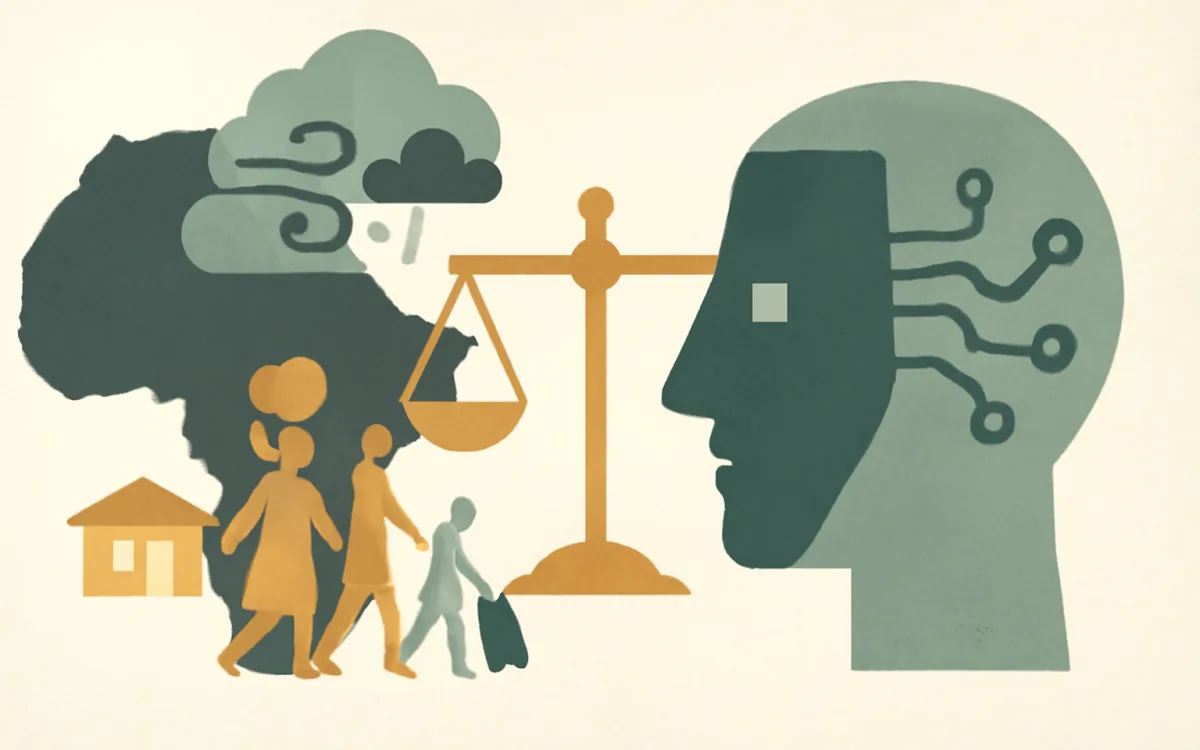
This study explores the intersection of mobility, climate change adaptation and artificial intelligence (AI) in South Africa. As climate change impacts mobility patterns, South Africa needs effective adaptation strategies, especially to manage the mobility of internally displaced persons (IDPs) and prevent maladaptation. Artificial intelligence is used to improve lives and livelihoods in such situations, but it raises legal and policy questions. The objective of the article is to uncover the legal and policy implications of AI's role as a climate technology for adaptation amongst IDPs in South Africa. The article utilises a qualitative desk-based approach to analyse legal frameworks, literature, official records such as parliamentary transcripts, non-governmental organisations (NGO) reports and online repositories on IDPs' mobility patterns and adaptation, as well as the South African government's technological interventions to support better adaptation. The findings reveal that AI can improve the planning of IDPs' relocation. Its tools can improve needs assessment, resource allocation, protection services or infrastructure planning. However, South Africa's legal frameworks lack specific provisions on AI. Hence, regulations are needed to address AI's evolving role in climate adaptation in South Africa. Contribution: The study concluded that with AI policies and laws, maladaptation associated with mobility can be mitigated in South Africa.
Continue reading this article
The abstract is always free. The full text, figures and PDF are available with a one-off purchase or an all-access subscription.
One payment, permanent access
- Full text and figures
- Permanent access, read any time
- Saved to your library
Every article, every field
- Unlimited reading
- All subject areas
- Cancel any time
Related research
 Full text requires access
Artificial intelligence for climate-health early warning systems in the Horn of Africa: opportunities, challenges, and a roadmap for action
Climate extremes, conflict, and population displacement converge in the Horn of Africa to accelerate outbreaks of climate-sensitive infectious diseases, wherea…
 Full text requires access
Application of Artificial Intelligence in analysing meteorological data for health research: A rapid review
Introduction: Artificial intelligence (AI) has rapidly advanced as a key analytical tool for processing complex datasets across disciplines, including environm…
 Full text requires access
From detection to action: artificial intelligence in integrated pest and invasive plant management
Global agriculture faces growing threats from pests, pathogens, and invasive species, intensified by climate change and biodiversity losses. Conventional appro…
 Full text requires access
Rethinking Dengue Preparedness in the Era of Climate Change, Urbanisation, and Digital Health: A Structured Narrative Review
Background and Objectives: Dengue is emerging as a multifaceted public health challenge that extends beyond traditional vector-borne disease frameworks. Climat…