Mapping the Convergence of Frontier Technologies for Major Environmental Challenges: A Chemical and Molecular Perspective on the Use of AI for Climate Action and Antimicrobial Resistance
- Published
- 17 September 2026
- DOI
- 10.3390/molecules31101571
- Views
- 5
- Reads
- 0
- Citations
- 0
Abstract
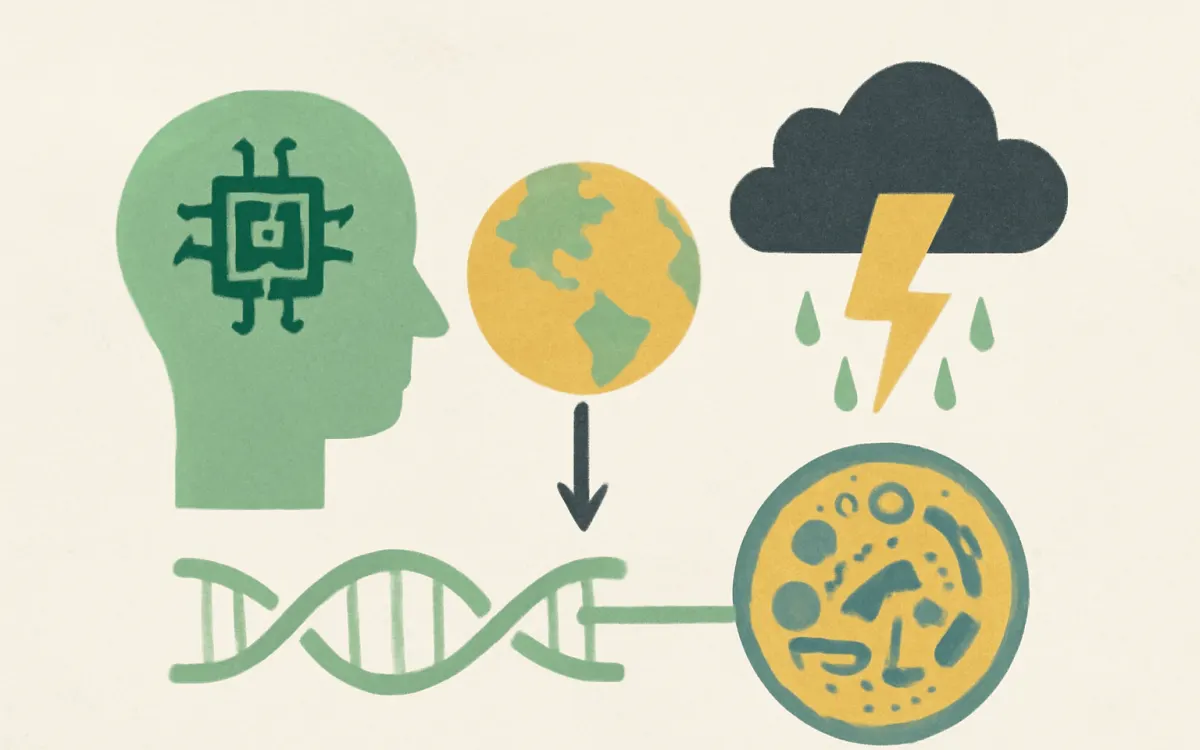
The planet faces the critical interconnected challenges of climate change and antimicrobial resistance (AMR); these two crises mutually reinforce each other, threatening global health and ecosystem stability. This study conducts a systematic documentary analysis to map the convergence and identify the structural gaps between two key technological domains: artificial intelligence (AI) for climate action and molecular methods for AMR. The methodology was based on a corpus of 179 scientific documents indexed in Scopus (2010-2025), analyzed with data science tools to identify trends, collaborations, and impact. Quantitative results revealed clear leadership by the United States, accounting for 37.4% of publications, followed by China (26.8%); this leadership reflects the concentration of high-throughput molecular surveillance infrastructure and data science clusters essential for monitoring the environmental resistome. In terms of scientific impact, Spain showed the highest average, with 32.8 citations per article. The most influential work, a review on food security and sustainability, accumulated 275 citations. Network analysis identified authors such as Zhu, Yongguan, with 240 citations in total, as central nodes in international collaborations. Thematically, metagenomics and machine learning emerged as mature and interconnected research cores. This analysis confirms a solid yet still fragmented relationship between the two fields. The analysis reveals that, while metagenomic tools dominate the current literature, a gap persists in correlating genotypic resistance potential with functional phenotypic expression under changing climatic stressors. The results confirm a solid yet still fragmented foundation, highlighting the need for hybrid platforms that transition from descriptive bibliometrics to functional integration for designing systemic solutions. Future work should prioritize the development of hybrid platforms, such as intelligent biosensors, and collaborative governance frameworks that accelerate effective responses to these dual crises.
Continue reading this article
The abstract is always free. The full text, figures and PDF are available with a one-off purchase or an all-access subscription.
One payment, permanent access
- Full text and figures
- Permanent access, read any time
- Saved to your library
Every article, every field
- Unlimited reading
- All subject areas
- Cancel any time
Related research
 Full text requires access
Artificial intelligence for climate-health early warning systems in the Horn of Africa: opportunities, challenges, and a roadmap for action
Climate extremes, conflict, and population displacement converge in the Horn of Africa to accelerate outbreaks of climate-sensitive infectious diseases, wherea…
 Full text requires access
Mobility as climate change adaptation in South Africa: Exploring the legal and policy significance of artificial intelligence
This study explores the intersection of mobility, climate change adaptation and artificial intelligence (AI) in South Africa. As climate change impacts mobilit…
 Full text requires access
Application of Artificial Intelligence in analysing meteorological data for health research: A rapid review
Introduction: Artificial intelligence (AI) has rapidly advanced as a key analytical tool for processing complex datasets across disciplines, including environm…
 Full text requires access
From detection to action: artificial intelligence in integrated pest and invasive plant management
Global agriculture faces growing threats from pests, pathogens, and invasive species, intensified by climate change and biodiversity losses. Conventional appro…