Artificial intelligence-enabled early warning systems for public health preparedness: perspectives of senior public health leaders in a Small Island Developing State
- Published
- 17 September 2026
- DOI
- 10.3389/fpubh.2026.1931303
- Views
- 2
- Reads
- 0
- Citations
- 0
Abstract
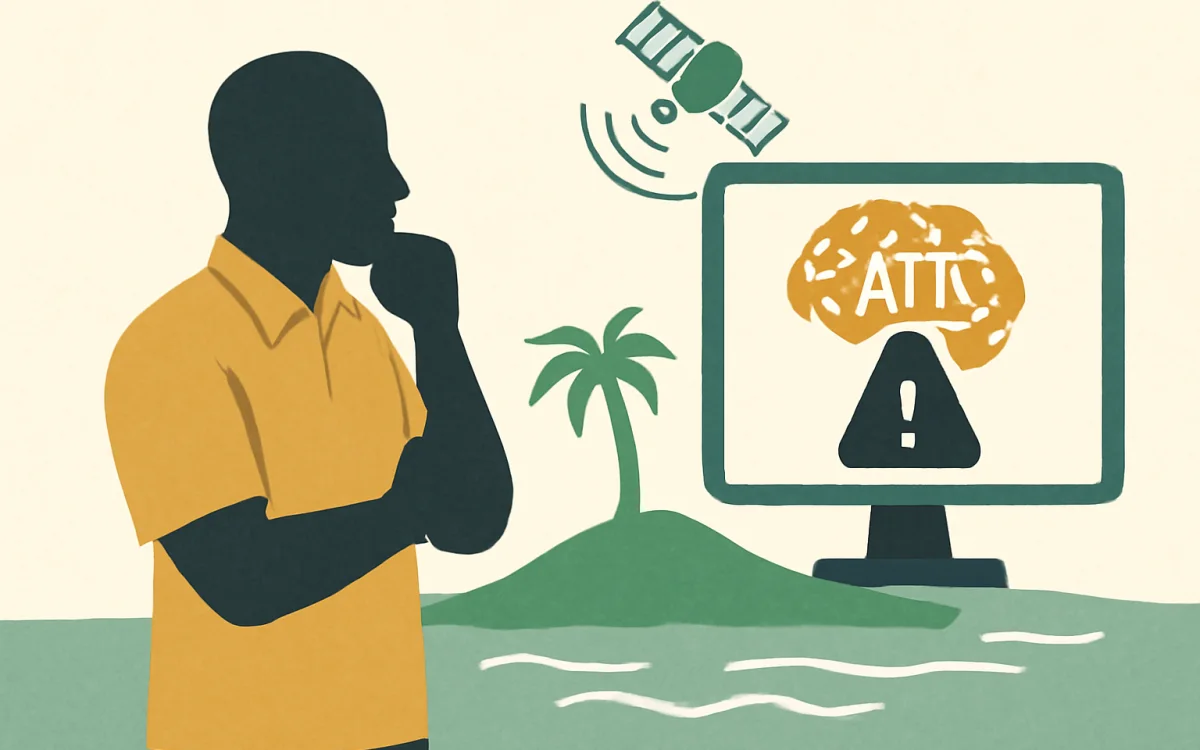
Purpose: Artificial intelligence-enabled early warning systems (AI-EWS) are increasingly recognised as tools for strengthening public health preparedness and education in climate-vulnerable settings. However, limited empirical evidence exists on how public health leaders perceive their use in practice. This study aimed to examine the perspectives of senior public health leaders, specifically County Medical Officers of Health (CMOHs), on AI-EWS in Trinidad and Tobago. Materials and methods: An exploratory descriptive study was conducted using a structured survey of County Medical Officers of Health, with six of nine CMOHs completing the questionnaire (response rate = 66.7%). The survey assessed familiarity, perceived usefulness, system priorities, institutional readiness, and implementation barriers. Data were analysed descriptively using frequencies and proportions, with open-ended responses summarised using inductive thematic categorisation. Results: All respondents (6/6) identified infectious diseases and flooding as priority applications for AI-EWS, while three (3/6) identified heat-related risks. Key system features, including dashboards (5/6), integration with emergency services (5/6), and automated alerts (3/6), were widely perceived as useful. Equity was prioritised by all respondents (6/6), particularly for underserved populations. However, barriers were also reported, including budget constraints (5/6), limited technical capacity (3/6), and data challenges (3/6). Conclusion: AI-EWS are perceived as valuable tools for supporting public health decision-making, coordination, and professional learning in SIDS contexts. However, successful implementation will require strengthening infrastructure, workforce capacity, governance frameworks, and equitable system design. These findings provide early empirical insight to inform the responsible integration of AI-enabled systems into public health education and preparedness.
Continue reading this article
The abstract is always free. The full text, figures and PDF are available with a one-off purchase or an all-access subscription.
One payment, permanent access
- Full text and figures
- Permanent access, read any time
- Saved to your library
Every article, every field
- Unlimited reading
- All subject areas
- Cancel any time
Related research
 Full text requires access
Artificial intelligence for climate-health early warning systems in the Horn of Africa: opportunities, challenges, and a roadmap for action
Climate extremes, conflict, and population displacement converge in the Horn of Africa to accelerate outbreaks of climate-sensitive infectious diseases, wherea…
 Full text requires access
Mobility as climate change adaptation in South Africa: Exploring the legal and policy significance of artificial intelligence
This study explores the intersection of mobility, climate change adaptation and artificial intelligence (AI) in South Africa. As climate change impacts mobilit…
 Full text requires access
Application of Artificial Intelligence in analysing meteorological data for health research: A rapid review
Introduction: Artificial intelligence (AI) has rapidly advanced as a key analytical tool for processing complex datasets across disciplines, including environm…
 Full text requires access
From detection to action: artificial intelligence in integrated pest and invasive plant management
Global agriculture faces growing threats from pests, pathogens, and invasive species, intensified by climate change and biodiversity losses. Conventional appro…